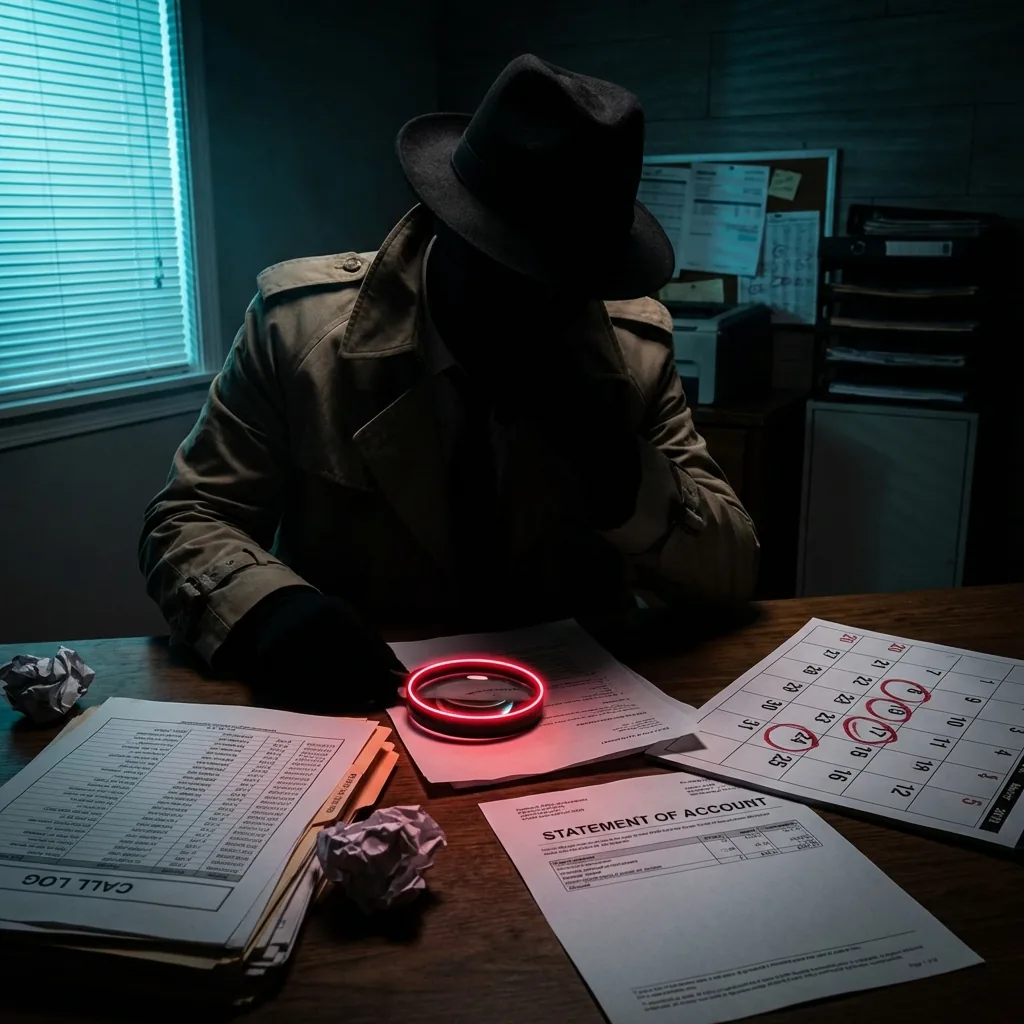
Deciding to investigate a cheating spouse is one of the most emotionally taxing moments in a marriage. When you notice sudden secrecy, guarded smartphones, or unexplained absences, your natural impulse is to demand immediate answers. Yet seasoned family law attorneys and private investigators agree on one cardinal rule: never confront a suspected spouse before you have objective, undeniable proof.
Confronting too early accomplishes only two things: it triggers defensive gaslighting (making you question your own sanity), and it alerts your partner to purge text logs, move communication to encrypted burner apps, and conceal financial trails. Approaching the situation methodically—and strictly within statutory boundaries outlined by the American Bar Association (ABA)—protects your peace of mind, your safety, and your legal standing.
4 Grounding Questions Before You Begin
- Can you maintain your normal demeanor? Tipping your hand through cold body language or sarcastic remarks will immediately put your spouse on high alert.
- Do you have confidential emotional support? Confide only in a licensed therapist, clergy member, or attorney—never mutual friends or in-laws who might leak your suspicions.
- What is your primary objective? Are you seeking truth for personal closure and marital counseling, or admissible evidence for asset division and child custody?
- Are you prepared to accept exonerating evidence? A true investigation seeks objective facts, whether they confirm an affair or prove your partner's innocence.
How to Investigate a Cheating Spouse via Shared Digital Records
When you set out to investigate a cheating spouse, you do not need to hack their phone to uncover powerful digital evidence. Married couples share an extensive ecosystem of joint accounts, household networks, and family billing portals that you have every legal right to inspect.
1. Observing Smartphone Behavioral Telemetry
Passcode Escalation & Face ID Removal
Switching from a known 4-digit PIN to an alphanumeric passcode or removing your biometric thumbprint from a formerly open device is a classic sign of digital compartmentalization.
Late-Night Encrypted App Sessions
As detailed in our guide to spotting a partner cheating on WhatsApp, unfaithful spouses frequently migrate to encrypted apps that leave zero trace on cellular carrier bills.
Apple CarPlay & Bluetooth Disconnection
Unpairing their smartphone from the family SUV's infotainment screen when you ride together prevents incoming text previews or recent call history from flashing on the dashboard.
2. Auditing Legitimate Shared Household Accounts
Focus your review on accounts where you are a named joint account holder or authorized administrator:
- Joint Wireless Carrier Portals: If you are an authorized account manager on Verizon, AT&T, or T-Mobile, itemized monthly statements show recurring phone numbers, call durations, and late-night SMS timestamps.
- Shared E-ZPass, SunPass & Toll Logs: Jointly held electronic toll transponders log exact highway plazas, dates, and timestamps—often proving a vehicle was across town when a spouse claimed to be working late.
- Shared Smart-Home & Security Ecosystems: Ring doorbell cameras, Nest thermostats, garage door app logs, and home Wi-Fi router device connection tables provide objective timestamps of when your spouse's phone actually arrived home or disconnected.
- Shared Cloud Photo Streams & Trash Folders: On shared family iPads or home computers synced to a joint iCloud or Google Photos library, check the "Recently Deleted" album and screenshot folders.
Behavioral & Schedule Pattern Documentation
Physical surveillance is ten times more cost-effective when preceded by two weeks of quiet schedule logging. Before hiring an investigator, build a private chronological log of the behavioral signs your spouse is cheating:
1. Mapping Recurring Time Windows
- Identify the "High-Probability Window": Most workplace or local affairs follow a predictable cadence—such as Tuesday/Thursday "gym sessions," Friday evening "happy hours," or Saturday morning errands.
- Log Stated Alibis Verbatim: Write down the exact excuse given (e.g., "Dinner with regional sales team at downtown steakhouse") along with departure and arrival times.
- Track Vehicle Odometer Readings: Note the mileage on the dashboard before and after an out-of-town "conference" or evening meeting to see if the distance driven matches the stated destination.
2. Physical & Wardrobe Anomalies
- Keeping a separate duffle bag with cologne, toiletries, and nicer clothing inside the trunk of their car.
- Coming home freshly showered from work or washing their own clothes immediately upon returning from a short business trip.
"She told me she was attending a certified nursing class every Wednesday evening from 6:00 to 9:30 PM. By quietly logging her odometer and toll receipts for three Wednesdays, I gave the CLUE surveillance team the exact window they needed. They documented her meeting a coworker at a boutique hotel on the very first night of surveillance."
Following the Money: Marital Asset & Receipt Audits
When you investigate a cheating spouse, financial records provide some of the most objective, court-admissible evidence available. Because married partners generally have legal access to joint bank accounts and tax filings, auditing marital cash flow is both safe and revealing:
Audit Joint Checking & Credit Card Statements
Look beyond obvious hotel charges. Scrutinize recurring charges at pharmacies, liquor stores, unfamiliar gas stations off their normal commute route, rideshare trips (Uber/Lyft), and restaurant bills whose totals reflect meals for two rather than a solo lunch.
Spot Supermarket "Cash-Back" & Gift Card Layering
Savvy spouses avoid ATM withdrawals by requesting $80 cash back at grocery self-checkouts or buying $250 Visa/Mastercard gift cards alongside household groceries. Comparing the register receipt to the bank statement exposes this discrepancy.
Check Airline Miles & Hotel Loyalty Portals
Many affairs are funded using accumulated Marriott, Hilton, Delta, or American Airlines loyalty points so no dollar charge hits the family credit card. Point redemption histories often reveal room bookings for two guests.
Inspect Tax Returns & Credit Reports for Undisclosed Accounts
Review Schedule B of your joint federal tax return for 1099-INT interest income from unfamiliar banks, or engage our transaction analysis team to trace hidden marital asset dissipation.
Critical Pitfalls to Avoid When Gathering Evidence
When emotions run high, well-meaning spouses sometimes resort to invasive DIY phone hacks or untested apps that backfire and tip off their partner. Digital privacy researchers at the Electronic Frontier Foundation (EFF) highlight that covert commercial spy apps often leak sensitive personal data to unverified third-party servers.
- Avoid Commercial "Spyware" or Tracking Apps: Shady tracking apps sold online are notoriously insecure, trigger telltale battery drain and device lag, and can expose your family's personal data.
- Avoid Unauthorized Hidden Recorders: Planting audio recording bugs in vehicles or private spaces violates privacy expectations and risks invalidating your findings in formal proceedings.
- Do Not Attempt Password Cracking: Guessing work or personal logins triggers two-factor authentication alerts and security warnings directly to your partner's phone, immediately tipping them off.
- Avoid Physical Tailing: Amateur trailing almost always gets noticed in rearview mirrors, compromising your element of discretion and driving secret communication further underground.
Focus on Lawful, Discreet Digital Fact-Finding
Clear answers come from objective, verifiable digital footprints—such as analyzing shared family billing statements, cloud photo timestamps, and device synchronization logs. Operating with discretion ensures you protect your own peace of mind while securing factual truth.
When to Hire a Licensed Private Investigator
The safest, most decisive way to investigate a cheating spouse without risking legal exposure or tipping them off is to retain a licensed private investigation agency. Professional investigators operate with specialized optics, unmarked surveillance vehicles, and statutory authority that private citizens lack.

What CLUE Private Investigators Deliver
- Discreet Field Surveillance: Multi-agent mobile and stationary surveillance documenting public displays of affection, hotel check-ins, and undisclosed meetings in high-definition video.
- Lawful Vehicle & Movement Intelligence: Where permitted by joint ownership and state statute, we deploy professional GPS tracking and pattern-of-life analysis.
- Paramour Identity & Background Checks: Through comprehensive background checks, we identify the affair partner—critical if they will be around your children or if workplace policy violations are involved.
- Court-Admissible Evidentiary Reports: Every photograph, video clip, and timeline log is backed by a formal chain of custody and investigator testimony if required by your divorce attorney.
Frequently Asked Questions
Is it legal to put a GPS tracker on my spouse's car to investigate infidelity?
Laws vary significantly by state. In many jurisdictions, placing a GPS tracker on a vehicle titled jointly in your name is permissible, whereas tracking a vehicle leased or owned solely by your spouse—or violating a protective order—can constitute criminal stalking or unlawful electronic surveillance. Always consult a licensed investigator or family law attorney in your state first.
Can I install spyware or a keylogger on my spouse's phone?
No. Installing stalkerware, keyloggers, or hidden monitoring software on a smartphone used by your spouse without their explicit consent violates the federal Electronic Communications Privacy Act (ECPA) and the Computer Fraud and Abuse Act (CFAA). Evidence obtained illegally is inadmissible in court and carries severe criminal penalties.
How long does a professional infidelity investigation usually take?
When a spouse exhibits predictable schedule anomalies—such as recurring Thursday evening "late meetings" or out-of-town weekend trips—targeted field surveillance by a licensed private investigator typically confirms or rules out an affair within 3 to 10 days of active monitoring.
Does proving infidelity help in a no-fault divorce state?
Even in pure no-fault divorce states, documented proof of an affair matters enormously if marital funds were spent on the affair partner (dissipation of assets), if an unfit paramour is around minor children in custody disputes, or if a prenuptial agreement contains an infidelity lifestyle clause.